August 2026
Bear Creek
The neighborhood dogs run free here through knee-high pathways they've carved through the brush after years of use. The branches mesh together into a nearly impenetrable thicket, only interrupted by an unsuspecting dirt road leading to a tucked-away barn — a little slice of recording heaven nearly an hour outside of Seattle.
This place is legendary, originally built in 1977 by Joe and Manny Hadlock, who now live in the adjacent cottage. The Hadlocks needed a studio to record sound for commercials, and it was the site of the classic Seattle Rainier Beer commercial. The frogs you hear croaking were the original residents of the property.
Later, a live room addition enabled the iconic sound of Soundgarden's Badmotorfinger and the Foo Fighters, and played an important role in the development of grunge. Bear Creek's walls are adorned with photographs from those early days, immortalizing musicians like Clapton, Lionel Richie, and even Manny and Joe's own son, Ryan, who can be seen growing up through the photos. Continuing his parents' legacy, he became an influential force in the evolution of indie-folk and Americana through his breakthrough work with The Lumineers, Vance Joy, and Brandi Carlile.
...
Bear Creek is undeniably the coolest studio in Washington State. I mean, what other studio has a hot tub and a treehouse? I had been trying to get an internship for a couple years, but my desperation-tinged emails and stammering voicemails were met with nothing until, on a fateful day, I finally got a response. I was invited in for an interview with the studio manager, Tim.
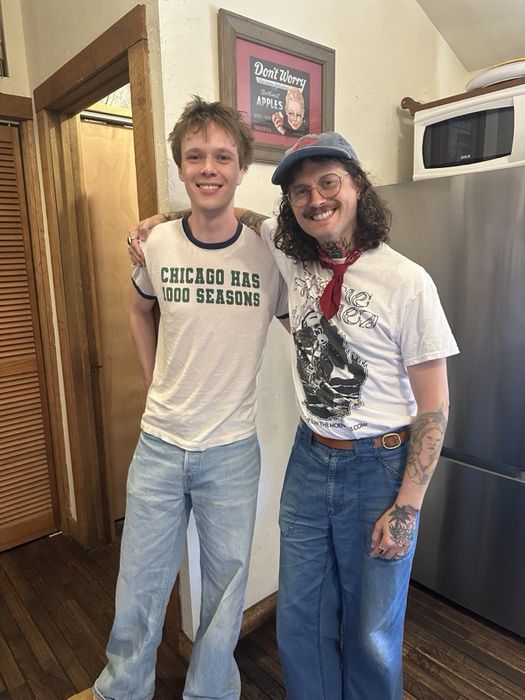
Tim has style. He's a highly articulate guy, mustachioed and tattooed with one prominent flame, its inky tendrils creeping their way up his neck just above the collar of his shirt. He's probably the only person I know who can rock a bandana — his dog, Fyodor, wears a matching one. He's very very good at his job. The type of good that's effortless and sets you up to be humbled when you try his job for yourself. An appreciator of all things fine — food, coffee (he used to be the #1 barista in Washington State), and of course music.
He told me my job would have three main roles: Janitor, Runner, and Engineer. I would come in each day and open, which meant turning on all the lights — a surprisingly difficult task considering that, in typical Bear Creek charm, half the light switches were hidden and the other half seemed to run to nothing at all — turning on amps, outboard gear, brewing coffee, vacuuming, and cleaning anything that needed it. Then I would shadow or help engineer when needed for a couple hours before running to pick up food for everyone, usually from the taco truck down the road.
The shadowing was where I learned the most. Bear Creek has some truly unique techniques that I'm taking with me and now sharing with you, dear reader.
- The RCA BK-1A is a 1950s broadcast microphone used by US presidents and can even be seen on the podium during MLK's "I Have a Dream" speech. So what does this ostensibly non-musical microphone have to do with anything musical? Well, it turns out its aggressive high-end rolloff, slammed through a DBX, creates a killer knee mic that truly sounds like nothing else. Say goodbye to needing ANY parallel compression.
- Acoustic guitar at Bear Creek is often recorded with seven microphones: a mono, usually a Royer-121; an XY pair — either two KM84s or one of the two rare AKG C24s they have; a pair of rooms; and then run that shit through a guitar amp with an SM57, plus another ribbon of your choice. Oh, and the DI? We're recording that too.
- Speaking of rooms, pretty much everything at Bear Creek is recorded with a pair of rooms because that live room sounds unbelievable. This helped me realize how important it is to anchor a song in a defined sonic space, and how subtly disorienting it can be for a listener if a song relies solely on digital reverbs to create the illusion of size and depth.
I was silently itching for an opportunity to get to work on my own stuff, and when the opportunity presented itself, I jumped on it. A few days opened up in mid-July where neither Tim nor Ryan was in. I called my friend Syd on my way home, and within a day she and her manager, Quinn, bought tickets to come to Seattle for the session.
Syd is a huge fan of Brandi Carlile, who recorded The Firewatcher's Daughter there and named her other album, Bear Creek, after — you guessed it — Bear Creek. Beyond Syd's love for the place, I wanted her to come since she's a phenomenal vocalist, both in her technical ability and in her taste. She has the vocal control of someone like Joni Mitchell (and a similar love for open tunings) with the sweet and gentle timbre of someone like Billie Eilish. Most of all, she knows herself and her audience, and I knew she would take the songs somewhere.
...
Work for me started ten days before our session. We picked six demos and I studied them till I had their structures memorized. I scrambled for a week looking for local session players who were skilled enough to learn and fully record each song in two hours, and who were available on such short notice. Many dead ends later, we ended up with some amazing players who brought their own flavors to the table:
Jade, our bassist, was a silent killer: after about the third song, it occurred to me that I hadn't given her much feedback and I might not be paying close enough attention to her parts — until I actually listened, only to discover she was playing exactly what the songs needed. Keelan, our drummer, brought great ideas to the table, particularly a signature groove on the bridge of "Penny" and a junk track throughout "Diving In" (loosely drumming on random found objects and humming). Jameson, an Oklahoma native with a taste for hot peppers, played acoustic guitar, pedal steel, and banjo, brought in the Nashville flair we were looking for, and put in some crazy hours. It wouldn't have been possible without them.
...
I was stressed to begin with, and it didn't help that our first day started off poorly due to a flighty AC worker servicing our AC, who took off without notice after discovering a wasps' nest the size of a quarter in the outdoor machine. While Ryan tried to lure him back to finish the job, we grew further and further behind on the setup until, to my horror, we decided it would just be best to start from scratch and redo the entire patchbay. Around one hundred small cables that route the tielines in the various recording rooms at Bear Creek into preamps, compression, and equalization had to be unplugged and replugged upon a sea of ports. It's a job that's prone to error without the time pressure and stress we were under. On top of that, the players had shown up, and I didn't have the bandwidth to properly meet them. As a nineteen-year-old, I already felt I had to prove myself to these middle-aged pros in order to be taken seriously and respected, so I had done so much to prepare to avoid a situation like this. It ended up being okay, and after sorting out everything and soundchecking, we were only an hour behind.
The days were fourteen hours long, and a poorly timed 11 p.m. coffee on the first night nearly took me out of commission for the second. It was a little window into the life I have been working towards for years: session players, a dedicated engineer, and, of course, an extremely talented artist. My job was simply to produce, and it made me fall in love with the whole thing over again. We would start by teaching the song in the live room, then straight to recording takes. Most of the time, we had enough to work with by only the fourth or fifth take. The joy of live tracking is that you capture a moment, and there's no time to get worked up in minutiae. It's a beautiful thing.
In the end, we ended up with six songs that hadn't existed before: "Penny," "Evergreen," "Casual Way," "Throw Me Right Back," "Diving In," and "The Old You." We had one lazy summer day together and a home-cooked meal of real PNW-style salmon before we said goodbye the next morning.
...
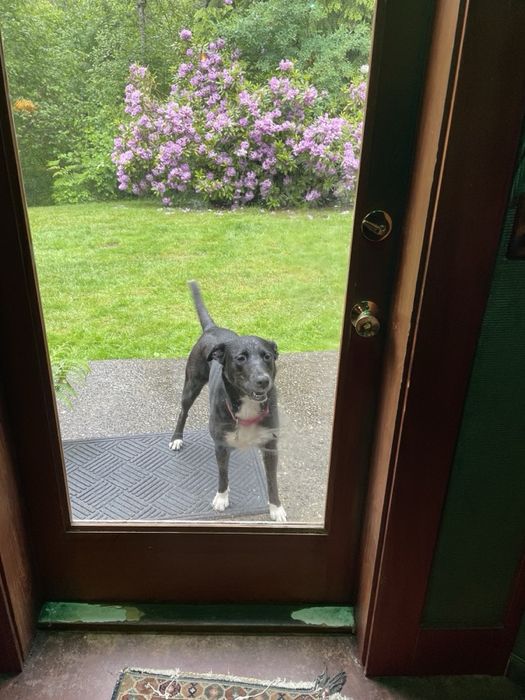
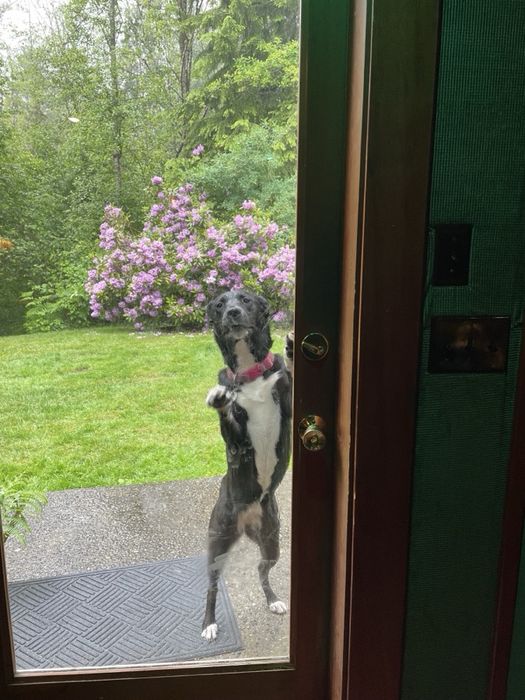
I had one final month left at Bear Creek before heading back to New York. The last stretch went by faster than ever, in a blur of friendly bands and mind-blowing session players, each pausing for a moment to leave their mark on Bear Creek and on all of us. I had pretty much gotten the job down at this point, so my days were more leisurely, trying to read Tim's mind before he prompted me to do anything, reading, and only occasionally punctuated by Kiki, Ryan's dog, jumping up on the control room door.
As my time drew to a close, I started to realize how much I'd miss the place and the people. The charm of Joe coming over in the mornings to mow the lawns and water his favorite plants. The treehouse with its perilous winding staircase, recycled from branches cut down in its own construction. Bear Creek's charm comes through its clutter and tradition. It feels like a family home, and through some invisible power, it inspires everyone who visits to respect it as if it were their own. A beacon for the idiosyncratic and bohemians of the world — those looking for an escape. I shared a final taco lunch with Tim, said my farewell, and flew back to NYC the next day.